Monday, February 7, 2011

The Best Films of 2010

Let us not pretend that this is a democracy.

There are any number of theories on what makes a proper “top ten” list and which films should and should not be eligible for inclusion. Despite this, I don’t really care.

This is not going to be a normal “top ten” list.

On it, you’ll find films that were released in their home countries in 2009 before opening in the U.S. in 2010, and you’ll find films that played in movie houses around the world without every properly opening in the US.

Films with a hyperlink were reviewed right here by yours truly, and the heading will click through to the original piece if you want to delve deeper.

As of this point, I’ve seen just about all of the films that I felt were necessary to make up this list, with the exception of Biutiful. Naturally, I reserve the right to make changes.

Incipit . . .

10. Machete
--Normally, gleefully trashy B-pictures aren’t my thing, but the fact remains that Machete was the single most fun experience I had at the movies all year. If you’re into folks swinging from intestines and grizzled heroes killing tons of people with really big knives after getting with just about every attractive actress in Hollywood, this one’s for you. ‘Cause we all need one of those sometimes.

9. 127 Hours
--One man. A rock. Trapped for days. The elements should add up to a marginally interesting story of survival. By contrast, 127 Hours is gritty and surprisingly theatrical in scope. Danny Boyle and Simon Beaufoy deserve a lot of credit for making what should be a small story into something much bigger, even somewhat fascinating. There’s more at stake than what happens when a man gets stuck in a canyon. It’s about why that man found himself alone in the canyon in the first place. James Franco’s never been better.

8. The Kids Are All Right
--When the film begins, it’s almost a study in how to make an audience feel awkward. It’s to director/co-writer Lisa Cholodenko’s credit that the film evolves into a wonderfully compelling look at a modern family with same-sex parents. Julianne Moore and Mark Ruffalo, in particular, are wonderful. The writing is deft, the performances are strong, and the emotion is true. The Kids Are All Right is groundbreaking, authentic, and resonant.

7. Another Year
--Another Year (and, by extension, Mike Leigh) refuses to give me exactly what I want as a moviegoer, and I love it for that. Nice little bows and neatly wrapped endings to clearly defined story arcs just won’t do here. I cannot think of another film that surpasses this one as a convincing slice of life. The performances are so, so strong, and Lesley Manville is utterly brilliant.

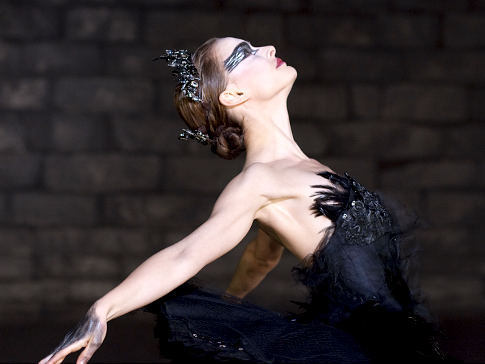
6. Black Swan
--Over the first hour, Black Swan is very quietly creepy in establishing one idea of reality, and then relentless in bashing that reality to bits in the second. Natalie Portman is the best I’ve ever seen her, and the last 10 minutes are breathtaking.

5. Blue Valentine
--In recent memory, there have been a handful of films that have attempted, in different ways, to capture the heartbeat of modern relationships. If Eternal Sunshine of the Spotless Mind was a dazzling work of abstract expressionism, Blue Valentine is the heartbreaking portrait in still life. Gosling and Williams are dazzling, and the script seems less a work of fiction than a recording of how people live, breathe, and love.

4. The Girl With The Dragon Tattoo
--Over and over, I was told that I needed to see this film because it was really, really good. I was (needlessly) concerned that the hype monster was going to strike again. It’s everything I heard it was, and much more. Lisbeth Salander is one of the best characters to hit the screen in years.The Girl With The Dragon Tattoo is unflinching, ruthless, spellbinding, romantic, shocking, and beautifully human. No matter what kind of movie you like, chances are good that this is going to satisfy you.

  • I thought a lot about what should top this list. Many of the films here lingered on in my imagination long after they’d finished. While this is usually a sign that there’s more at work than meets the eye, it does not necessarily mean that a film’s better or worse than initially thought. I toyed with the idea of not even ranking the films numerically so as to not have to make a tough decision. However, I decided to go for it.
  • The final three films represent such a leap in quality that they deserve a separation from the rest of the pack. Any of them could have easily each found itself in the top slot. My decision between #2 and #3 came down to my impression of which film had the more lasting impact emotionally. My pick for the top spot ultimately came out of my decision as to which film I would change the least, if given the chance.

3. True Grit
--If there are better filmmakers than Joel and Ethan Coen working today, I’d like to meet them. True Grit tackles a familiar story with a grace, vitality, and humor the original film never had. Films like this are like feasts in a time of famine. There’s such a sure, confident hand at work in the writing that I doubt that anyone else could take such an established set of genre conventions and make them feel this fresh. I think True Grit is one of the better films the Coens have ever made. Jeff Bridges is simply outstanding in one of his finest performances. He was born to play Rooster Cogburn. Yet again, this is how you make a proper film.

2. Toy Story 3
--Threequels, by definition, have the odds steeply stacked against them. Anything worth developing left over from the original film is usually finished off in the second, and a third or fourth installment is generally a miscalculated misstep to try to expand the mythos. It’s astounding that Toy Story 3 is as effective as it is, and I am dumbfounded by the depth of the emotional experience I had with it. This is one of the best films Pixar has ever made and it just might be the finest film in the trilogy. The conclusion nears perfection.

1. Certified Copy
-- Here is a film that could have been made 50 years ago, and would probably have more easily fit in the cinematic landscape of that period. Kiaorostami’s film reminds me of Antonioni’s La Notte and the poignancy 60’s-era Godard brought to his better work. On paper, the story of a relationship between two people that becomes murkier as it progresses doesn’t seem like compelling dramatic material. It’s remarkable just how wrong that assumption is. Certified Copy is verbose without becoming dull, slippery without becoming frustrating, and enlightening without failing to entertain. Juliette Binoche’s radiant performance is one of, if not THE, best in a stellar career. The warmth she brings to the film is a rare thing. I would be lying if I said that I have all of the ins and outs of the narrative worked out. However, while the film may not be easily explained, it makes sense emotionally, and that is what makes all the difference. A beautiful meditation on art, love, and life.

Finis.

Monday, January 10, 2011

Somewhere: "News flash! Money doesn't buy happiness!"

As a filmmaker, Sofia Coppola has always been most interested in the concept of alienation. I’ve always found her work to be a compelling portrait of what happens to a person when he/she is disconnected from what’s considered the norm and placed, for varying reasons, on the same shelf as the “famous” or “different.” Unfortunately, Somewhere is the least effective, and (by definition) worst film she’s ever made.

Somewhere is about Johnny Marco, (Stephen Dorff) an actor whose life is an endless series of parties, women, press junkets, and lonely nights. He sees his 11 year old daughter Cleo (Elle Fanning) periodically, until her mother decides she needs some “time,” leaving her with Johnny, and the two spend a few weeks together.

Now, Johnny is clearly floundering in his personal life, but his career seems to be going great, as he’s obviously in demand and apparently well-liked. He’s not even a jerk, which is unusual for a movie like this. Normally, the main character would be some kind of womanizing slouch. While he’s definitely a womanizer, he’s quiet about it, and avoids becoming the stereotypically loud, flamboyant sex machine one would expect. So, if he’s not a jerk and he’s not that bad of a guy, then what’s his problem?

He’s really, REALLY bored.

Unfortunately, much of the narrative is devoted to showing us just how bored he is, which only serves to spread his condition to the viewer. Audiences like to watch character’s lives through the window of the screen, but they don’t like to be made to feel like they’re staring. Here, we watch Johnny race his car around a desert track not once or twice, but four times. We watch some very mediocre pole dancers go through multiple routines, and do you think we’re spared from seeing the whole thing? Guess again. When Johnny takes Cleo to her ice skating lesson to practice her long program, we watch . . . wait for it . . . the whole thing. When he’s sitting on the couch with a beer and cigarette, we stay with him until he’s finished the cigarette. Naturalism isn't a bad thing. In their films, Jean-Pierre and Luc Dardenne spend much of their time following their characters around as they move through their daily lives to wonderful effect. The difference with them is that their work features strong narrative "engines" and striking characters, neither of which is the case in Somewhere.

There was a couple behind me who spent the entire film whispering back and forth to each other. After about 10 minutes, I found myself wondering what on earth they could be confused about, as nothing notable had happened on the screen. Later, one of them seemed to be using the light from the screen to clip fingernails.

In recent times, I find myself asking these questions more and more. “Why does this story need to be told? What compelled the filmmaker to go to the trouble to make the film?”If I can’t find a suitable answer for that question, then, chances are, it’s not a film I think much of. Frustratingly, Somewhere left me in that same lurch.

All in all, the characters don’t say much. I know that’s one of Coppola’s minimalist trademarks, but I would have loved to hear something interesting come out of their mouths for a few minutes. I wanted to see some kind of passionate response from them about something. Does Cleo find out about her dad’s womanizing habits? Yes. Is she significantly bothered by them? Not really. Why include this at all if it’s not going to be used to any purpose? Johnny gets anonymous text messages throughout the film telling him what a jerk he is, when the guy we’re watching doesn’t seem all that bad. It got old. Late in the film, Johnny delivers a pivotal line of dialogue that the person he’s speaking with clearly can’t hear. Is inaudible dialogue turning into a fetish for Sofia? In the oft-discussed ending of Lost In Translation, the audience can’t hear what Bob and Charlotte are saying, and it’s a beautiful moment that caps off a connection formed between two wonderfully realized characters. In Somewhere, it’s flipped around so that the audience can hear what the character can’t. It doesn’t make sense why Johnny wouldn’t have the courage to say what he needs to straight out in a quieter moment. It would have been much more meaningful and would have been in keeping with Johnny’s character. As it’s delivered, the words "cliché" and "cheeseball" come to mind, two words that, in a perfect world, would never be used together.

And what’s with the music??? Normally, Sofia Coppola’s choice and placement are impeccable. Most of Somewhere doesn’t have any kind of soundtrack, and, when music is actually used, it’s very quiet. I wanted something like the glorious “Girls” from the beginning of Lost In Translation or “What Ever Happened” from Marie Antoinette. SOMETHING. Instead, almost all we get are songs that we’ve already heard because we’ve seen the trailer 1500 times, and we don’t even get to properly hear them. If you’re going to play that Strokes song again, can you at least turn it up so I can hear it? It’s a good song. However, there is a big bright spot in the form of a song called "Teddy Bear." It's performed by a guy named Romulo who accompanies himself on a wonderfully out-of-tune classical guitar. It's charming, endearing, and, in a microcosm, everything Somewhere would like to be.

Perhaps the biggest problem that arises in the film is the fact that Johnny just isn’t a terribly compelling character, and Stephen Dorff’s work isn't anything to write home about. The character operates on a very narrow band of quiet resignation without much variance. As such, when he has his breakdown scene, it’s not entirely believable. Some actors can cry and make you believe it, others can’t.

It's hard to watch Somewhere without thinking about Lost In Translation. Both are about famous men who spend time with a girl/woman, finding a new sense of priority and renewed source of strength. While Bill Murray was able to take the material and craft a finely-tuned portrait of middle-aged loneliness, Stephen Dorff doesn't seem to bring anything distinctive to what he's been given. I think that, in large part, it's not entirely his fault. Coppola should have given the script another pass (or two or three), and attempted to inject some kind of life into this dull, dull story of inconsequential goings-on.

After waiting several years for the follow-up to Marie Antoinette, I’ve missed Sofia Coppola.

After Somewhere, I still do.

2 stars (out of 5)

Saturday, January 1, 2011

1/1/11

Happy New Year to all of you. Personally, I'm looking forward the chance to start afresh with 12 brand, spanking-new months. Despite the fact that we're only talking about the arbitrary choice of a specific date by a bunch of white guys in the 15th century, it's as good a day as any to hit the rewind or reset button.

Thank you for your support in 2010. Despite unexpected changes and necessary adjustments, we're still here, and I'm very grateful for those who take the time to read Things I Know About The Movies. It's my hope that, in 2011, our reach grows closer to the realm in which our goals have taken residence. In the next few weeks, look for an article with a bunch of capsule reviews of some of the bigger films I didn't take the time to review at length, and, of course, my list of the best films of 2010. I'd have that done already, but I'm waiting on a few films to open in my area. 2011's going to have a few surprises for you too, so keep your eyes open. I'm excited, and I hope you are too.

Mazel tov!

-Adam

Friday, December 31, 2010

Another Year: On How Life Is


We tell stories about all kinds of things. Love. Passion. Murder. Crime. Retribution. Triumph. Smart people doing dumb things. Dumb people doing smart things. There are stories about kings leading armies into battle. There are stories about small romances and great romances, and there are stories about little people that one would never hear of or remember unless they were a personal acquaintance. Every so often, there’s a story told that we call a “slice of life.” Another Year is one of these stories, but it’s more than that. Where other films try to portray the lives of people we think we know, Mike Leigh holds down the corner on the market. This is one of the truest examples of what a slice of life looks like that I’ve seen.

The story’s simple. In 4 acts that mirror the changing seasons, it’s about another year in the lives of two of the nicer people you’re ever bound to meet on a movie screen. The emphasis isn’t on any obvious character arcs, which is in direct opposition to the accepted norms of most standardized screenwriting. Instead, it seems to me that Leigh’s goal is to portray the grace and nurturing power that these two people hold over those they come in contact with.

Tom and Gerri, wonderfully played by Jim Broadbent and Ruth Sheen, weren’t even on screen for 2 minutes and I found myself thinking, “That is the kind of relationship I want to have when I am older. That is the type of person I would like to be.” I can only hope that, if I am fortunate enough to marry, my partner and I will have the kind of love and deep friendship that they have. There’s not an ounce of fakery in the kindness evident in every frame they share. These two people love each other, and what’s more, there’s not a moment on screen that either of them is shown concealing anything from each other. They’ve moved past pretense and pretending and are content to simply be, and be together.
Another Year is very different from the film I’d been anticipating. Mike Leigh is interested in relating the totality of a person's life experience, not just the fun bits. Near the end of the film, there’s a scene where someone shows up at Tom and Gerri’s house unannounced and has to talk a third person into letting her come inside. In other hands, this sequence would have lasted about 30 seconds. Leigh lets it run its course, and it lasts at least 2-3 minutes, possibly even longer.

You know something? It’s awkward when 2 people don’t know each other and are trying to get something done. You know this. I know this. I think everyone does. The difference here is that Leigh has confidence that his audience will keep a steady eye on things, even when they’re awkward. In the movies, we’ve become very used to only seeing the most exciting parts of someone’s life. There’s a reason that the quiet months that Forrest Gump spends with Jenny in his big ol’ house only last for about 5-10 minutes, now, isn’t there?

Unlikely as it might seem, I don’t think Another Year’s central character is Tom or Gerri. It's Lesley Manville who gives the film's standout performance. I’ve seen her in a couple of Leigh’s other films, but I can’t say I remember her from them. She’s wonderful here. Mary is a co-worker of Gerri’s that, I suspect, has been coming over for dinner/counseling sessions since the day they met. She’s the type of person that I’ve met on many occasions and have been more times than I care to admit. She’s fundamentally unhappy with the way her life’s going and is convinced that the next big thing is what’s going to make her happy.

First, it’s a new car that’s going to be “small and red.” When she gets it, there are all manner of problems. They’re funny as can be, and it’s a warmly affectionate kind of humor. While it’s clear that she’s been pining away for Joe, Tom and Gerri’s son, for years, I don’t think she’d be happy even if she got him to like her. The happiness she seeks can only come from self-actualization and self-acceptance. She already has all of the support she needs to begin the process. Her mistake is to look outward for what can only be found within.
It’s ironic when she finally does find someone that she connects with as an equal. Everyone else in the group is used to her nattering on and on about her life and what she’s going to do. Not this person. He has no frame of reference, and is so quiet that it forces her to slow down and, sometimes, just breathe. Later, she tells him, “it’s really nice to have someone that you can talk to.” This is coming from a woman who’s spent the entire film talking, talking, talking to anyone who will listen to her. She’s only known this man for a matter of hours and has hardly told him anything about her life, but feels that the tiny bit of herself that she’s shared is more genuine than these people she’s known for 20 years. That’s striking.

Mike Leigh doesn’t usually do what I want him to do, and he doesn’t usually do what I think he ought to do. I am beginning to think that this is a good thing. Another Year has a combination of subtlety, honesty, and clarity rarely encountered in contemporary film. It is my continued hope that room be found for the film on the awards circuit, with particular regard to Leigh’s screenplay and Manville’s performance. In a year dominated by high concept stories and "big stars," Another Year and the people in it have a little place in my heart. They can stay as long as they like.

4 stars (out of 5)

Friday, December 24, 2010

A.I. Artificial Intelligence (2001): Look Again

Contribution to The Spielberg Blogathon. Thanks to Adam Zanzie and Ryan Kelly for hosting.

If you have not seen the film in question, you would be very foolish to read this.

One of the main charges that’s often labeled at Steven Spielberg is that he’s never content to leave well-enough alone and must always end his films on a sentimental (if not clearly positive) note. This viewpoint isn’t entirely unfair. It’s a trait that, for better or worse, Spielberg has demonstrated at various points throughout his career. The guy likes things to end on the classic Hollywood lump-in-the-throat. However, putting whether this is good or bad aside, there’s one place that the sentimentality charge simply doesn’t fit, and, oddly enough, it’s one of the most often used examples of Spielberg’s penchant for sentimentality.

A.I. Artificial Intelligence
is often criticized/decried/lamented for being the film that Stanley Kubrick might have directed. The story’s simple enough. In a distant future, humans use robots called "mechas" to do all of the jobs that they don't want to do. A technician creates a child mecha that, once activated and specifically imprinted to a human being, has the ability to love that person. David, the child mecha, spends his entire life looking for ways to earn the love of the human being he considers to be his mother. Kubrick started conceptualizing the project in the 1970’s. Along the way, he showed Steven Spielberg what he was working on, spoke with him at length about the project, and attached him as a producer. For various reasons, he didn’t actually make the film, and tried to give the project to Steven, who didn’t want to take over the film. However, after Kubrick’s death, his family approached him with the project again, and Steven set out to complete Kubrick's vision.

Visually, the film’s spectacular, and I’d argue that the script (written by Spielberg himself) has nary a wrong step. Despite this, the fact remains that there’s a large contingent who believes that the film goes on about 20 minutes too long. Their preferred ending would come with David sitting in the sunken underwater remains of Coney Island, staring at the statue of the Blue Fairy, waiting for her to turn him into a real boy.

Then, the film departs into a distant future. A group of advanced mechas/robots exploring a frozen Manhattan find David and re-activate him, downloading his memories. What’s quickly apparent is that humanity has become extinct and these beings have never met their creators. David is the first link they’ve found to the heritage they cannot understand. After telling him the fate of humankind and of his “mother,” they tell him that they have found a way to recreate individual humans from a single strand of DNA present in something like a lock of hair. However, these people only live for one day, and, upon falling asleep, die for the last time. Unsurprisingly, David asks for his mother to be revived. They spend a wonderful day together, the kind of day that David had always wanted to spend with her. Finally, she falls asleep, as does David, and the film ends.

Detractors find this ending a cop-out, claiming that this is Spielberg’s attempt to soften a narrative that’s too harsh to fit within his usual aesthetic. Initially, I understood this point of view, even if I felt that the ending served the film successfully. What’s ironic about this is that the film ends exactly the way that Kubrick intended.

So, what does this mean?

The first time I watched the film, I took the ending at face value. It meant what it said it did, and wasn’t anything more than that. Then, I thought about it, thought about it some more, and came to a different understanding.
See, the ending is anything but a happy one. It is impossible to recreate all that an individual human being is from a single strand of DNA, even in the fantastical world of A.I. Artificial Intelligence. Even if it were possible to recreate a person’s body (which is not entirely inconceivable), DNA isn’t truly what makes a person a unique individual. Memories created by a singular life experience are the things that define who someone is. If it were possible to reconstruct someone’s body, there would be no way to restore that person’s soul. The lights would be on, but the same person wouldn’t be home.

It’s ironic that the most caring creatures in the film are these advanced mechas. Even as person after person has used (and abused) David, what remains after humanity is dead has surpassed its creators in kindness and basic “human” decency. After David’s memories have been downloaded, the advanced mechas have learned all that they’re going to about humanity from him, and they’ve decided to give him the only thing that he’s ever really wanted: the love of his mother. It would be simple for them to deactivate David or to modify him to become a member of their community, but instead they choose to GIVE. They know exactly what it will take to make him happy, and they provide that for him. The Monica that we knew in the first part of the film wouldn’t treat David with as much love as her recreation does. No, she’d want to know where her husband and son were, what was going on, and why David, who she’d abandoned, was there in the first place. Through their processing of his memories, the advanced mechas knew exactly what David has always wanted from her, that he had a lock of her hair, and construct an elaborate fiction that will allow them to provide it for him. Finally, remember that David does not sleep, so his curling up next to Monica to go to the “place where dreams are born” is an impossibility. Essentially, they’re allowing him the chance to end his life after experiencing ultimate happiness.

While it’s a tragedy that A.I. Artificial Intelligence hasn’t taken its place in the cinematic canon, I think it’s because the film is smarter than a lot of its audience. In this version of the Pinocchio story, the dream of becoming “real” doesn’t come true so much as the protagonist, and, by extension, the audience, believes that it has come true. It’s no small thanks to this ruse that A.I. Artificial Intelligence gains so much resonance.

What resonates more? A lump-in-the-throat happy ending or an ending built on the deception that someone’s gotten everything that he wants when he hasn’t gotten a thing? You already know what I think.

Saturday, December 18, 2010

A Tale Told In Gasps


I gratefully acknowledge my good friend J for being a first-rate discussion partner after the screening.

I’ve been anticipating Black Swan for months. MONTHS. The studio’s release schedule is one that’s pretty tough to figure out. I don’t get why they’ve screened the film to high heaven at festivals and previews, building anticipation to a fever pitch, and then have put it out an inch at a time.

No matter. It’s gone wide now, and whether or not it finds its way to a large audience remains to be seen. Now, onto the matter at hand.

Black Swan is a crazy ride of a movie, filled with moments that alternately make the head tilt, the body cringe, and the heart flutter. Natalie Portman's performance is the best I’ve ever seen her give. Period. Not only do I think she’ll merit some serious consideration come the year-end awards process, but I also hope she wins, since my other favorite performance (Juliette Binoche in Certified Copy) probably won’t be eligible. While the rest of the cast is strong, this is Natalie Portman's movie.

Portman is Nina Sayers, a member of a successful ballet company. After the forced retirement of the company’s aging star (a strong Winona Ryder), Nina is cast in the title role in Swan Lake, and must portray both the chaste, serene White Swan and the wild, lustful Black Swan. Her struggle for perfection, present from the first frame, drives her mad as her role becomes reality.

To be honest, Black Swan isn’t quite the film I’d expected. I’m not sure if the superiority of the last half of the film is due to an increase in quality or to the first half laying tracks for the train. Who knows? Black Swan kept me guessing, and made me wince more than once, which is a lot more than I can say for most other films. I am more inclined to think that it’s a film that requires time to build traction and gain momentum to make its way to a climax. After having heard so much about it, I was surprised to see this. I’d anticipated the type of mindbender that would engross from the get-go, much like the way Mulholland Dr. enthralls from the opening frame.

Here, I stumble over my own thoughts. Both films are fairly “quiet,” allowing the viewer time to take a deep breath before sucking the air out of his/her lungs. However, they’re very different in the way they go about telling a story, and I’m not entirely sure how to describe the divide. Let's try this. . . both films put the viewer down in drastically different places than he/she had been picked up in the first place. Where David Lynch’s film is a lyrically hypnotic dream in which the nightmare is in found in waking up instead of going to sleep, Darren Aronofsky’s fever dream simmers, simmers, and finally boils until it’s consumed.

The validity of perception is one of the biggest questions raised throughout Black Swan. As a viewer, it’s so easy to get caught up in Nina’s struggle to keep her head on straight that it can become tough to keep an objective perspective. By objective, I’m not suggesting that the film experience should be a dry and boring one that’s approached like a reporter covering a bake sale. What I mean is that, by the end of the film, it dawns upon the viewer how little of the story may have really happened the way it initially appeared to. For example, Nina’s mother seems to be a very controlling person, leaving almost no part of Nina’s home life unregulated. It’s in the reexamination of the narrative that I began to wonder exactly how accurate my perception of her actually was. I mean, if I thought that A, B, and C were all true, and they were proved to be tied up in Nina’s delusions, then it’s logical to conclude that the ramifications could spread through the entire alphabet, right?

However, with Black Swan, I really do want to understand the subtleties of the narrative, and will watch the film again (if not several times) with the hope of gaining valuable perspective. Conversely, with Inception, 2010’s biggest "head trip" movie, I’m not particularly interested in trying to plumb its shallow depths to try and figure things out. I just don't really care.

Darren Aronofsky’s direction reminds me very much of his work on The Wrestler, particularly with his prolific use of Super 16mm and his fascination with following his characters from behind as they move from place to place. However, I’m not a big fan of his prolific use of hand-held cameras, though I did warm to them a bit, at least in the way he tried to film the dancing sequences so as to capture their sense of rhythm and movement. There was one specific instance where I felt that he was trying to unnecessarily punctuate a certain surprise moment. I got it the first time, Darren. No need to go for a “da-DUM!” It may seem like a minor quibble, but it does detract from the air of gravitas he’s trying to establish.

Through much of Black Swan, I found myself waiting for the thrills I’d expected to manifest early on. Let me tell you, when they hit, they come with a vengeance. The last 10 minutes or so is gripping cinema that's tautly beautiful. I’m inclined to think that the film’s ending is quite possibly a perfect one. I have a very small number of narrative endings that I consider to be perfect, and I wasn’t expecting Black Swan to find a way on that list. The conclusion thrilled me, but, much more than that, I was enthralled, blasted back in my seat, in the happy delirium of the satisfied cinephile.

Ahhhhhhhhh.

4 ½ stars (out of 5)

Wednesday, December 8, 2010

Early Review: True Grit

If there are better filmmakers than Joel and Ethan Coen alive and working today, then I’d like to meet them. The seemingly effortless way they control the tone of their films and the brilliance of their craftsmanship are second to none. I’ve often said that, if one wanted to make a film, all that’s necessary is to watch No Country For Old Men for a “textbook” example of how do to do the job right. True Grit is the next chapter in that book.

True Grit is based on a 1969 film with John Wayne, which was itself based on a 1968 novel. All three feature a quest to find the man who killed 14 year old Maddie Ross’ father, with Maddie helped by Marshal Rueben “Rooster” Cogburn and La Boeuf, a Texas Ranger. Now, I can’t speak for the novel, because I haven’t read it. However, the Coen Brothers’ film is so much of an improvement over the original that it suggests the difference between the Jonas Brothers and the Beatles. It’s all pop music, but they are NOT, by any stretch of the imagination, doing the same thing.

The script is fantastic. Joel and Ethan have more than found a way to walk the narrative tightrope between retelling a well-known story and putting their own spin on things. Their version is much more organic than Marguerite Roberts’ original. I was amazed at how much more fluid the film’s pacing is. Most of the same moments, conversations, and setpieces take place, but they’re allowed to do so within a narrative rhythm, where certain bits in the original stuck out in awkward places. Joel and Ethan’s seamless script takes the same moments and, through changing the timing or setting, infuses the story with an energy and vitality that just wasn’t there the first time around.

It’s because of the structural tightening that True Grit really takes flight. Not surprisingly, the Coens bring out a lot of the story's inherent humor. I found myself cracking up all throughout the film, and not always when everyone else in the theater was too. I’m ok with that. What’s more, their version of the post-Civil War South feels so much more real than anything that the original accomplished. Where 1969’s take was squeaky clean and refined, 2010 is still refined, but much, much grimier, leaner, and meaner.

Jeff Bridges’ performance. . . oh, wow. He’s five times the actor John Wayne ever was. (yes, I said it) While Wayne's Cogburn was a charming character because of his self-consciousness as a performer, Bridges effortlessly goes further than that. He brings a remarkable sense of depth to the character. Instead of only being an old man who wants to do things his way and usually ends up shooting anyone who tries to stop him, he’s a gruff guy who can barely be understood a lot of the time. He drinks too much and sometimes says things that he doesn’t mean. Mostly, he’s got a very simple way of looking at the world. After making Maddie climb a tall tree to identify and cut down a dead man hanging there, he turns him over and says, “I do not know this man.” And it’s hilarious.

You know why? It’s because it’s true. He doesn’t know the guy.

Like The Big Lebowski and the Dude who only wanted his rug back because it tied the room together, Cogburn needed to find out if the man was who they were looking for, was too old/heavy to climb the tree, made Maddie do it, and it just wasn’t the right guy. Case closed. That’s where a lot of the Coen Brothers’ humor comes from. Their jokes aren’t anything revolutionary, and they’re not even that complicated. They just have the guts/balls/chutzpah/common sense to say things out loud that are completely obvious.

The direction and editing are wonderful. By serving as “Roderick Jaynes,” their own editor, Joel and Ethan are able to alternately shoot and select exactly the shots they want. Sometimes, when I’m watching a film, I want to stretch out my hands, make them into a rectangular window, and try to capture what I’m seeing. I think of those shots as shots that were born rather than created. True Grit has many born moments, and they're beautiful.

There’s another aspect of the Coens’ craft that often goes unlooked. They have the souls of poets. No matter what type of film they’re making, there’s an element of what Herzog refers to as a “deeper truth, an ecstasy of truth.” Whether it’s the evocative simplicity of the ending of No Country For Old Men, the Dude and Walter’s hug on the cliff in The Big Lebowski, or the rumination on the meaning of life in the police car in Fargo, they’re quietly at work creating some of the most affecting moments in cinema today. It’s not enough for Joel and Ethan to just tell a story. They find a way to leave the viewer with something that connects that story to daily life. Here, in a story that’s been told for years, there’s a sense that more is at hand than simple retribution for a crime committed. Time passes. Children are forced to grow up too soon. Men must admit that they are wrong. People grow old. “Time has a way of moving past us.” I am grateful, so grateful, for these moments.

As True Grit neared its conclusion, there’s a sequence where two characters on horseback race against time, and you know what, reader? I got a little bit emotional. 2010’s been such a lackluster year for cinema that it was like giving a hungry man a meal. On the inside, I was crying out, “THIS is how you make a movie. This is how you do it.” I’m reminded of something Emily Dickinson said once. Someone asked her what poetry was and she said that she didn’t know how to describe it, but when she read something and felt like the top of her head was being blown off, then that was poetry. She knew it when she found it. That’s what True Grit is. I may get tongue-tied if you ask me exactly what makes a great film, but I know how it feels when I find it.

People often look fondly at older films and say, “They just don’t make ‘em like they used to.” They’re right.

Here, Joel and Ethan Coen didn’t make one like folks used to. They made one better.

4 ½ stars (out of 5)

Thursday, November 25, 2010

Thoughts From a Red Rug - Certified Copy

From AFI Fest.
Certified Copy is an evocative, sly, intelligent, and ultimately poignant dream of a film. Abbas Kiarostami’s work here reminds me of the best of Godard and Antonioni. On the surface, the story is simple enough. A woman who specializes in antiques meets an expert who’s just written a book that questions the idea that an original piece of art is superior to a copy of itself. She decides to take him around to see various works of art before he has to leave for another stop on his tour in support of the book. Along the way, their conversation evolves until it’s become something else entirely and the nature of their relationship is called into question. Are they actually a long-married couple who’s merely pretending to have just met? Or are they two people who’ve only just met that are pretending to be a long-married couple?

In the end, does it matter?

Here, strangely, I don’t think that it does. Ordinarily, things like that drive me up the wall. I grow weary when I feel that a filmmaker’s pretensions toward making some kind of artistic statement overshadow what should be his/her commitment to tonal consistency. If you’re happy with what you’ve made, that’s great, but I need a way inside in order to be able to step back and regard it as a whole.

That’s part of what makes Certified Copy so fascinating. Even though the nature of their relationship is still murky by the end of the film, it rings true. It may not make empirical sense, but it makes emotional sense. I’m reminded of Buñuel’s decision to cast two actresses as Conchita in That Obscure Object Of Desire. The similarity is striking. Both are decisions that should not work, but do so despite the odds against them.


Juliette Binoche may be the most beautiful woman in the world. I can’t think of another actor, male or female, who can light up the screen like she can with a simple smile. It’s a radiant thing. She won the Best Actress prize at Cannes for her work here, and it’s not hard to see why. Her character runs the gauntlet emotionally speaking, sometimes in a short period of time. According to IMDB, the film won’t be released in the States until March 2011, which would mean that her performance will probably be overlooked come award season. That’s terrible.

Of films released in the US in 2010, I can only think of two performances by an actress that rival hers: Carey Mulligan in Never Let Me Go and Noomi Rapace in the Millennium Trilogy. While I sincerely hope that both of these performances receive consideration, the idea that Binoche’s work is probably going to be forgotten is yet another sign that the way films are distributed in this country is all wrong. Something like Transformers (I know that this franchise is an easy target, but it remains so nonetheless) gets greenlit sight unseen and ends up in thousands of theaters around the country, while Certified Copy is pushed off into a corner. By delaying its release until early next year, it will be ineligible for most, if not all, year-end awards in the U.S. What’s more, a movie coming out in March will almost never contend for major awards the following year. Essentially, by sticking the film in that slot, it’s being condemned to fade away into insignificance when it should be given the chance to shine.

What might even be worse is the idea that, even if circumstances were drastically different, Binoche still might not receive any serious consideration. The masses in America have been convinced that they’re not going to be interested in films that aren’t easily found in local megaplexes. The idea that she won’t even be given the chance is something that makes me sad.


Certified Copy hearkens back to an older time when films were made with characters who were preoccupied with the questions of life, death, art, and the meanings thereof. 50 years ago, it was possible to make a film where the main conflict was that of ideas, not armies or souped-up robotic creatures, and have that film find its way to an audience.

When did we lose that curiosity? When did it become important only to provide thrills and chills to an audience and blind them with beautiful people? I’m not suggesting that films don’t, on some level, have some obligation to divert one’s attention, though I hesitate to use the word “entertain” as an overarching responsibility. I think that, too many times, the emphasis is on entertainment through titillation of the senses at the expense of enlightenment through stimulation of the mind. Certified Copy finds a way to entertain and enlighten. The majority of the film consists of two people talking, talking, talking, and it’s almost never less than fully engaging. It doesn’t NEED crashing cars and the like. No, it’s concerned with the nature of identity itself, and has the courage to explore the questions with intelligence and grace.

Can a stand-in ever take the place of an original? Is there such a thing as finding the right thing twice in a lifetime? At what point does a person’s love for something overshadow his/her head shouting that it’s not right to feel that way? By the end of the film, I came to a point where I’d come to a conclusion regarding which relationship of the two main characters was true and which was the illusion.

But, you know, I’m not sure. Still, I feel almost as though nit-picking instances of plot and story are to miss the point. Midway through the film, Binoche finds herself gazing into the mirror/camera as she styles her hair, chooses earrings to wear, and re-applies her lipstick. For her, it’s a hopeful gesture, as she’s hoping that it’ll be something that will be noticed by her husband/companion. The final shot of the film is of him gazing into a mirror at his reflection, but instead of making any effort to change what he sees, he regards himself tiredly, almost resignedly. He runs water, but never splashes any on his face, as most men would. I think the most beautiful moment in the film occurs at the conclusion. Throughout the film, they’ve referenced her brother-in-law’s stammer and the way that her sister loves how it makes him stretch out her name. Elle looks at her husband with a beautiful, tear-filled smile and calls him “J-j-j-james.” If Certified Copy had been released 45 years ago, there would be film classes taught about that moment.

Certified Copy is more than merely one of 2010’s best films. It’s one of the better films I’ve seen in some time. It knows something about life and has the courage to share it with us.

The heart understands what the head cannot.

4 ½ stars (out of 5)